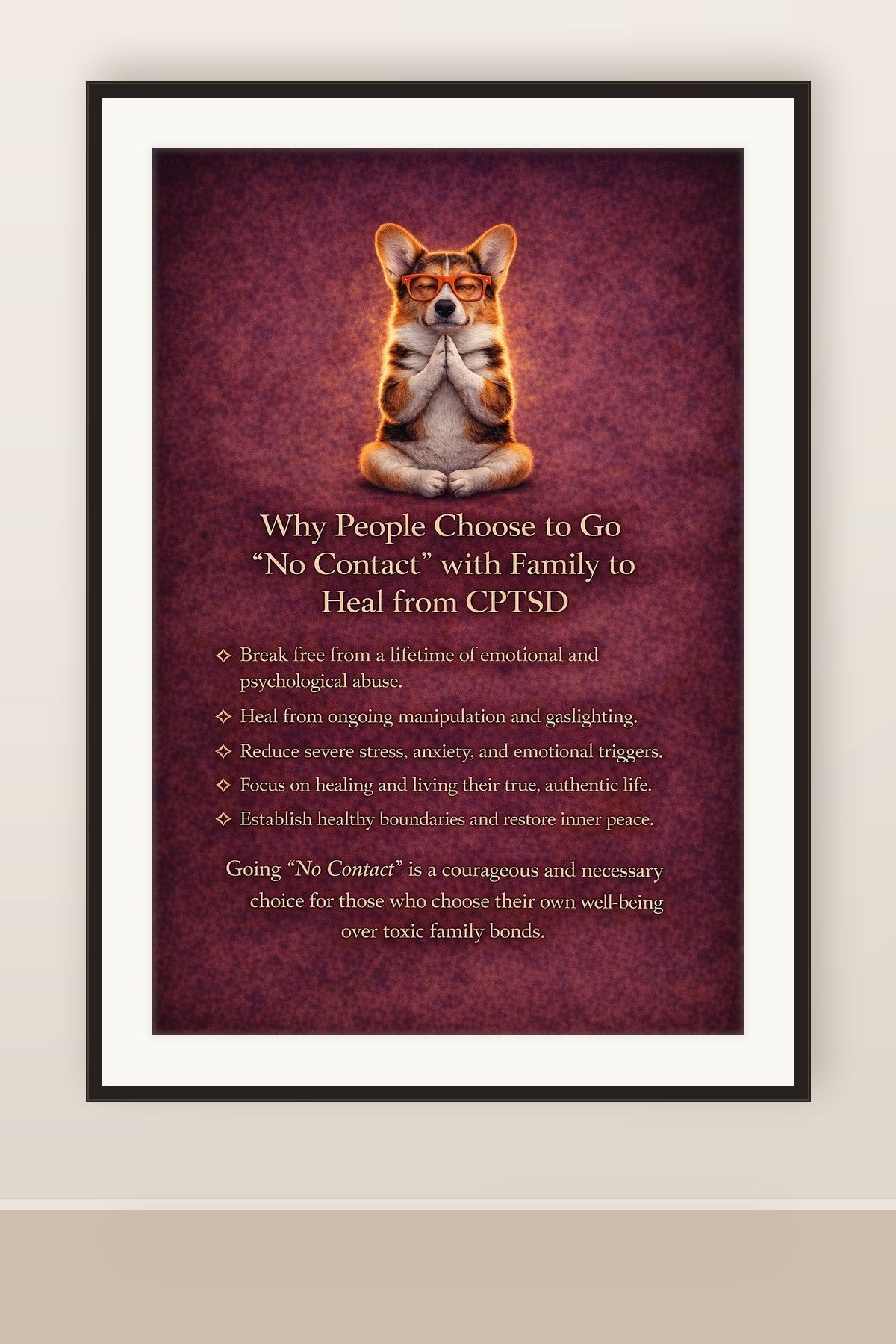
Why People Go No Contact to Heal From CPTSD
Why People Go No Contact to Heal From CPTSD
Couldn't load pickup availability
No contact is not a universal prescription.
For some people, distance becomes part of how they create safety, reduce repeated exposure to harmful dynamics, and make room for recovery. This printable psychoeducational handout explains reasons some people choose no contact in the context of complex trauma without presenting it as the right choice for everyone.
Why People Choose to Go “No Contact” with Family to Heal from CPTSD
Designed as a conversation aid and educational resource for people trying to understand why reconciliation, continued access, and healing are not always the same thing.
What's in the kit
The handout, in every format you would actually use it in.
- 4 × 6 in (1200 × 1800 px, 300 DPI)
- 8 × 12 in (2400 × 3600 px, 300 DPI)
- 12 × 18 in (3600 × 5400 px, 300 DPI)
- 16 × 24 in (4800 × 7200 px, 300 DPI)
Screen versions
- Phone: 1290 × 2796 for iPhone, 1080 × 2400 for Android
- Tablet: 2048 × 2732
- Desktop: 2560 × 1440 and 1920 × 1080
- Video call backgrounds at 1920 × 1080, left and right versions
Folded card format
- Flat 10 × 7 in at 300 DPI, folds to a 5 × 7 card with a blank inside. Useful if you want to hand this to someone rather than pin it up.
Plus a printing guide, a contents list, your licence, and a short note on how to hold this material, including crisis resources. Sixteen files, one instant download, nothing ships.
Keep following the pattern: Browse The Scapegoat's Survival Guide for more printable resources about boundaries, manipulation, family roles, and recovery language.
This artwork was created using AI image generation tools, then selected, composed, and edited by hand. Personal use licence: print it, put it on your own devices, share it in person. Not for resale or redistribution. Eve's Visionary Endeavors LLC.
Educational summary only. Not legal, medical, or mental-health advice.
Share